
Warped patriotism
What defines a country?

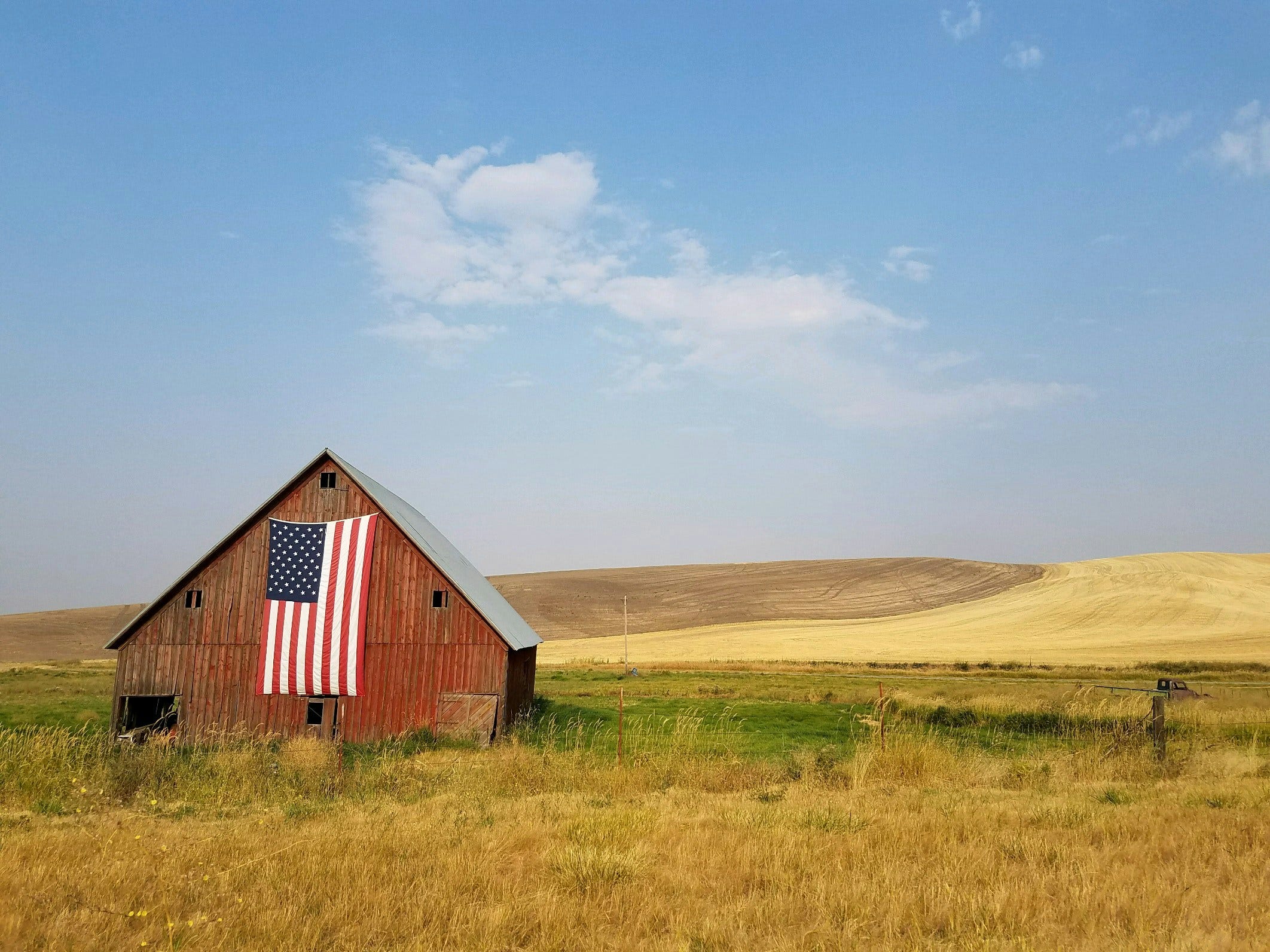
I LEFT AMERICA FOUR YEARS ago for graduate school in the UK. I’m back at the moment, and that’s about as much as I know. I can’t see the future or where it takes place. I could write a book at this point about the differences between the two countries which are supposed to enjoy a “special relationship”, and an even longer book about what each place means to me personally. But for now all I want is to be out of time, out of the present. The UK has a great “slow journalism” magazine called Delayed Gratification in which news events are revisited and discussed months after they occurred. One particular event seems to be on my mind at the moment, the near catastrophe from seventeen months ago, which draws a stark contrast between the United States and the United Kingdom.
During the first week I arrived in London, I met someone from Manchester who told me they were about to visit America for the first time. She was scared, though. She asked, “What if I go into a McDonalds and get shot?” Thank god I didn’t laugh, because she was not exagerrating to be funny. She was genuinely frightened, and went on to tell me about how her friends and family had previously witnessed a lot of crime in America, and nearly all of it involved guns. I have previously written about my hatred for gun violence, which has actually intensified the longer I have lived outside of the US.
The international reputation of America (among other labels) is that of a terrifying, anarchic nation. A friend of mine from South London said to me once that he’s not even sure it’s a real place. To grow up outside of the US offers a chance to view its virtues objectively. Women, especially, do not want to raise children there. I tend to ask a lot, out of curiosity, and the majority of people say they would live in America for a short while, but not forever, especially when they could return to Europe, Britain, or literally anywhere else in the world to avoid cars and guns.
I carry an affliction in which I relate personally to the history of a country and what is currently taking place within it. Plato wrote a lot about how the ideal city would reflect the soul of a just man, and I think there’s a lot more to be said about understanding social and political structures, like nation states, as people. For another time, perhaps, but right now I’m thinking about how democracy is a mirror, and George Carlin’s quote about why he never made fun of politicians. Why do they suck, he rhetorically asked. Because they are a symptom:
They [politicians] come from American parents and American families, American homes, American schools, American churches, American businesses and American universities, and they are elected by American citizens. This is the best we can do folks. This is what we have to offer. It’s what our system produces. Garbage in, garbage out.
In July of 2024, a rouge assassin nearly killed Donald Trump on the presidential campaign trail. I wrote a response afterwards, so a few of you may remember it, but I have decided to repost it below. It’s not the best topic or sentiment to end 2025 with, but this year has been full of burnt matches. I’m in a pensive, brooding mood and am greatly looking forward to a blank slate. Naturally, the end of the year prompts reflection, and I keep thinking about the gap between the view from within America’s borders and how it all looks from abroad.
I recently finished Martin Amis’ book The Zone of Interest. The novel takes place at Auschwitz and concerns a Nazi officer who falls in love with a married woman. The tale unfolds through his perspective, along with the viewpoint of the camp’s commandant and a Jewish prisoner. When interviewed about the purpose of the book in 2014, Amis said that he would have usually replied that he’s in the education business. However, he cited Steven Pinker’s work, The Better Angels of Our Nature: Why Violence Has Declined, about how the rise of the novel can be correlated with a decline in violence. And so his new hope, at the time, was for his book to make people less violent.
Today and for the new year, I hope for a less violent world.
All essays from The Moronic Inferno are allergic to likes & comments. Please share instead:
IT IS ONE OF THE STRANGEST features of the human condition that evidently no response to a tragedy seems sufficient. Everything appears to fall short. The deluge of commentary after the demoralizing attempted assassination on Trump has been appropriately dished out, but do people actually feel how utterly calamitous the incident was? “The United States dodged a catastrophe”— does America feel the weight of that sentence? No matter what is said about the infamous day, it is difficult to imagine words being able to match the gravity of the moment. But it is not a shortcoming of language. It is something else.
There is a stretch of time (about ten seconds) during the shooting in Butler, Pennsylvania that has not gotten much attention in the media. It occurred right after Trump got to his feet, threw his fist to the sky, and mouthed “fight” to his supporters. The crowd erupted, as if on cue, into that nauseating chant: “U-S-A! U-S-A!”
Something about that moment felt downright backwards. It’s time to beat our chests? Right after a brush with death? Why not chant for Trump himself, for still being alive? There are times when it is undoubtedly appropriate to loudly profess pride in one’s nation, like the Olympics. But a celebratory expression of patriotism after a lone gunman nearly killed a presidential candidate is out of place. Or so I thought. Now, however, I realize it was not. It was not out of place at all, but rather the inevitable result and expression of a distinctly American moment.
For anybody who has not witnessed the countless episodes leading up to this thankfully failed crescendo, the tragic event this weekend truly dawns the central malady of America: No matter how many calls for peace ring out, it is a violent country. It is a place where you take your own risks. It is a combative place, where you are applauded if you emerge victorious, regardless if it’s by accident, talent, or cheating. It is a modern Machiavellian nightmare boiling with hatred and on the edge of political collapse.
We heard it affirmed last night, too, when J.D. Vance addressed the Republican National Convention in Milwaukee. He told a story about his grandmother (Mamaw), who passed away shortly before he was deployed to Iraq in 2005:
[W]hen we went through her things, we found nineteen loaded handguns,
Immediate laughter and applause.
They were stashed all over her house — under her bed, in the closet, in the silverware drawer. And we wondered what was going on, and it occurred to us that towards the end of her life, Mamaw couldn’t get around so well. And so this frail old woman made sure that no matter where she was, she was within arm’s length of whatever she needed to protect her family. That’s who we fight for! That’s American spirit!
Cheers, applause, hoots and hollers. And then: “U-S-A! U-S-A!” Twelve times over.
In other words, it does not matter that there is a constant looming threat of being attacked by your neighbors in your home. Or at school, the cinema, the mall, the supermarket, a concert, a synagogue, a church, a night club, a park, or literally anywhere. That’s just America. The spirit comes from the willingness to be in the brawl itself, from the strength to fight back and protect yourself. The ethos of the United States is a society for the plight of the individual, who, if they can survive and bear the battleground, will be able to live the American dream, while of course being constantly vigilant for those who want to take it away from them.
Unless you share the former disposition, you don’t really want to live in America. You most likely want to live in America 2.0 — the upgraded, progressive version that is collectivist and safe. Citizens who do proclaim to love their Kentucky-fried country strive for such a futuristic vision but do so from a place of financial or social privilege — from a position where the revolutionary resolve has been tempered, where the life-threatening choice of a family to emigrate and seek a new homeland is too far in the past to be appreciated, and where one can remain relatively shielded from policy changes.
The 2024 election is bound to produce more disparities — moments where words and feelings do not seem to align. Those times might seem incongruent due to partisan differences, but this is not a direct line of demarcation between a liberal and conservative worldview. The sentiment of a voluntary gamble — charged with danger and violence — is bred-in-the-bone. An inborn risk exists in America, still loitering after the violent acquisition of liberty and successful revolt against the British Army. The next risk to undertake is in November. After that perhaps we can work on outgrowing the attachment to such a perilous existence.